


Ready to Upgrade Your Lighting?
Get help choosing the right AEON LED solution for your field, facility, venue, or outdoor space.


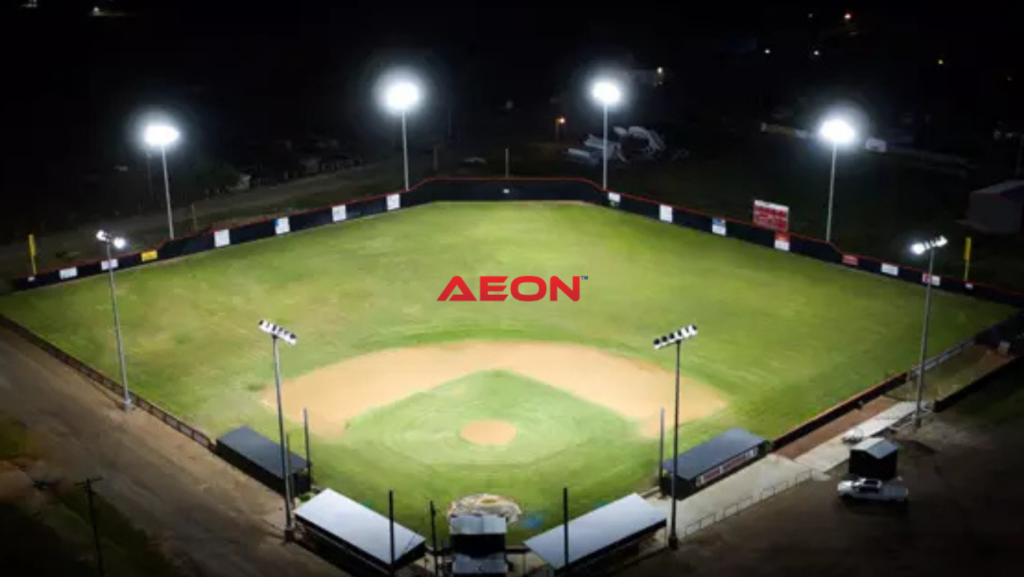
Baseball field lighting requires strong visibility across the infield, outfield, baselines, and vertical ball path. Players need to track fast-moving balls against the night sky, while spectators and officials need consistent visibility across the entire field.
AEON LED baseball field lights help schools, parks, municipalities, and sports complexes improve visibility while reducing energy use and maintenance compared with traditional HID systems.
Before replacing fixtures, request a professional baseball field lighting layout to confirm pole locations, fixture count, aiming, light levels, uniformity, and spill control.
Clear visibility for throws, ground balls, steals, and defensive reactions.
Strong lighting for fly balls, line drives, and full-field coverage.
Consistent visibility for players, coaches, umpires, and spectators.
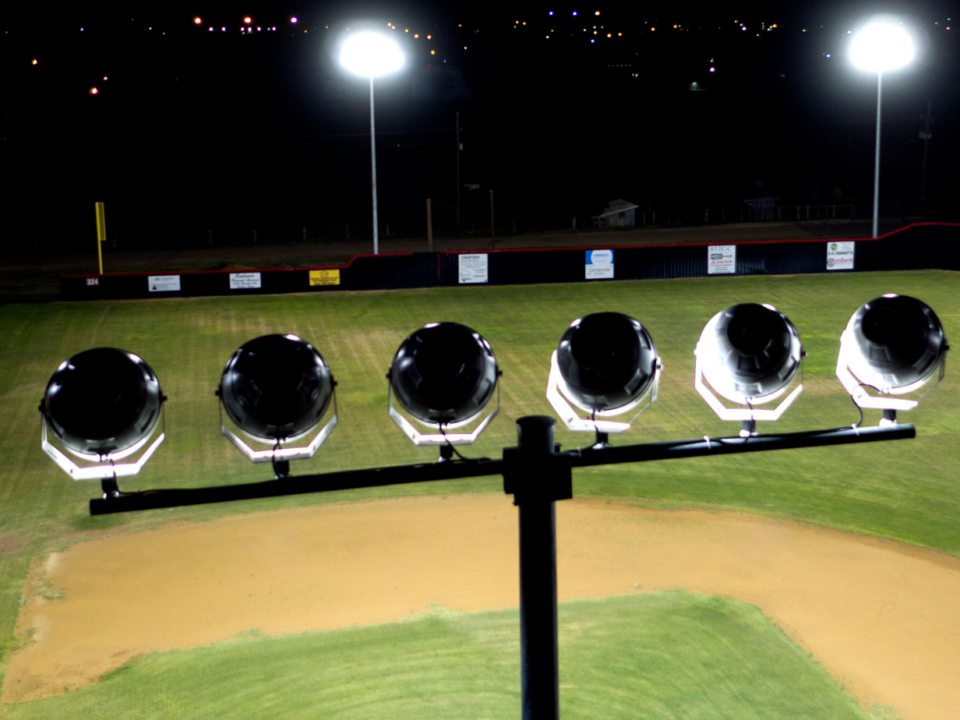
Vertical visibility helps players track baseballs against the night sky.
Choosing baseball field lights starts with your facility, not a predetermined fixture count. Tell AEON whether you are upgrading an existing field or planning a new installation, and share the intended level of play and any known project requirements.
Review the proposed equipment alongside your lighting layout. Ask which models and optical distributions are being recommended, what electrical and mounting information must be confirmed, and which controls are included in the proposal.
Check out AEON’s sports-lighting products and current specification documents before finalizing your equipment selection.
Evaluate the proposed lighting system as a whole rather than comparing the wattage of two individual fixtures. Your operating-cost estimate should account for the total number of luminaires, their electrical input, annual operating hours, and your electricity rate.
A project may use a different number of LED luminaires than the system it replaces. Ask for a side-by-side comparison showing the existing and proposed system power, the lighting objectives, and the assumptions behind any savings estimate.
Include maintenance in the discussion, too. Review access for servicing, cleaning requirements, replacement components, and the actual warranty coverage. A long LED life rating does not mean that every part of the lighting system is maintenance-free or covered for that entire period.
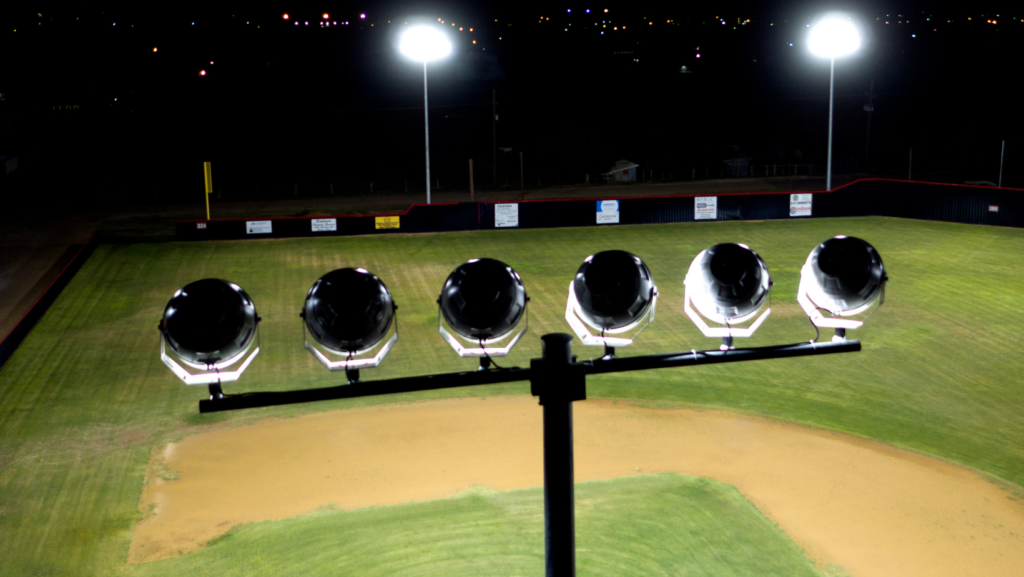
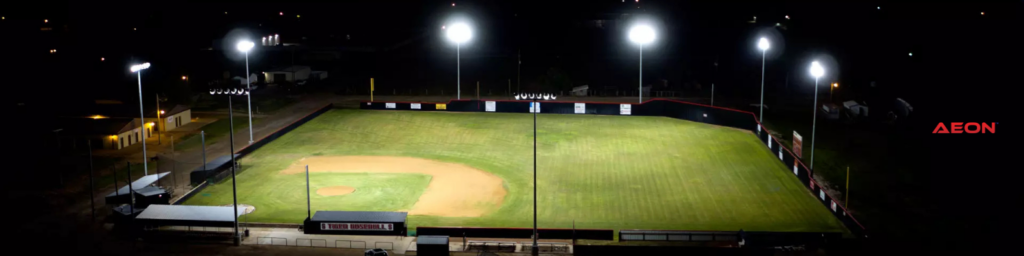
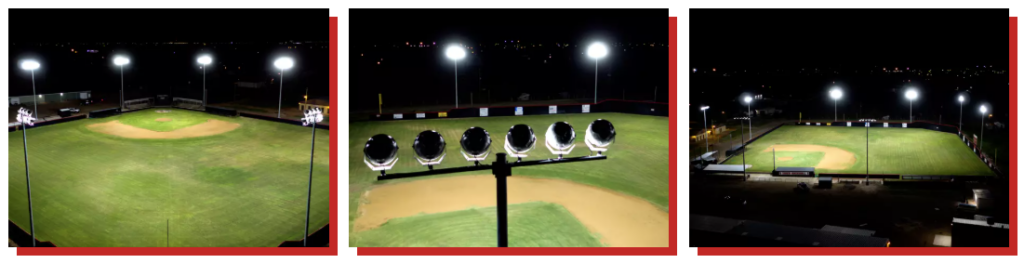
Slaton High School in Texas upgraded a baseball field that previously used 34 metal-halide fixtures. AEON’s published case study describes a photometric design using 60 AEON 750W luminaires to address the field’s lighting needs.
| Project comparison | Previous system | AEON installation |
|---|---|---|
| Number of fixtures | 34 | 60 |
| Reported input per fixture | 1,610W, including ballast draw | 750W |
| Reported total system power | 54,740W | 45,000W |
The published figures represent approximately 18% lower connected lighting power, despite the higher fixture count. This is a project-specific comparison not a promise of the same reduction at every field. Annual electricity use and bill savings also depend on operating hours, controls, and utility charges.
Start with the field’s actual dimensions, including the foul-line distances and center-field distance. For an existing installation, gather the pole locations, mounting heights, fixture counts, and any available electrical or equipment records.
Explain how the field will be used, whether games will be streamed or televised, and whether there are surrounding properties or operating restrictions that the project team should consider.
Bring the information you have to the initial discussion and identify anything that still needs to be confirmed. Do not use another field’s fixture count as a substitute for a layout developed around your own facility.
Need help understanding foot-candles, uniformity, and design criteria? Read our baseball and softball lighting standards guide before reviewing your proposed layout.
Planning a new baseball lighting system or replacing an existing installation? Request an AEON sports lighting layout to review the proposed equipment and calculated field illumination before moving forward.
Ask AEON to determine the proposed quantity through a project-specific layout. Provide your field dimensions, mounting information, intended use, and lighting requirements rather than choosing a fixture count from another installation.
Have the existing poles, foundations, mounting arrangement, and electrical infrastructure evaluated before assuming they can be reused. Include any available drawings, equipment records, and site information in the project discussion.
Ask for the proposed models and fixture quantities, layout results, total system power, controls, warranty terms, and a clear statement of what is included. Compare equipment-only pricing separately from installation and other project costs.
No. Review the selected product’s life rating together with its service requirements and warranty. LED output can change over time, and the performance of drivers and other components also matters.
Get help choosing the right AEON LED solution for your field, facility, venue, or outdoor space.