
Ready to Upgrade Your Lighting?
Get help choosing the right AEON LED solution for your field, facility, venue, or outdoor space.

Two proposals can both promise “LED sports field lighting” while pricing very different projects. One may include luminaires and a lighting layout. Another may also include mounting hardware, controls, electrical work, installation, aiming, field testing, and closeout documents.
A useful sports field lighting request for proposals (RFP) makes those differences clear before prices are compared. It tells respondents what the facility needs, what work belongs in the proposal, what documents must be submitted, and how the owner plans to evaluate the finished system.
For a school, municipality, parks department, university, or private athletic facility, start with the actual project not a preferred fixture wattage, a borrowed fixture count, or a blanket savings percentage.
Before drafting technical requirements, confirm how the owner is permitted to purchase the equipment and services. An RFP, a sealed construction bid, and a request for equipment pricing are different procurement tools. For federally funded projects governed by 2 CFR Part 200, procurement staff should review the applicable requirements and determine the appropriate process.
Then state exactly what respondents are being asked to price. Do not rely on “turnkey” as the entire scope description.
Luminaires, identified accessories, and the product documents specifically listed in the solicitation.
The equipment package plus named deliverables such as photometric layouts, IES files, controls guidance, or submittal support.
Work assigned to qualified contractors and professionals, including the defined equipment, engineering, permits, installation, testing, and closeout responsibilities.
The owner requests proposals for an LED lighting project at [facility name and address], serving [fields and intended activities]. The procurement covers [describe the equipment-supply or installed-project scope]. Each proposal shall identify included equipment and services, exclusions, allowances, and the party responsible for each required deliverable.
Where alternatives are permitted, describe the required performance and essential characteristics instead of treating one fixture’s wattage as the comparison standard. A proposed alternative should document how it meets the owner’s requirements.
Public and grant-funded owners should also have procurement staff review vendor participation in developing specifications, statements of work, and bid requirements before asking a prospective supplier to help write the solicitation.
Prepare one common site-information package so proposals are based on the same field dimensions, existing conditions, intended uses, and schedule constraints.
Include available site plans, field markings, pole locations, mounting heights, fixture quantities, known electrical-service information, and photographs. For a multipurpose facility, identify every sport and field arrangement that must be evaluated. Also state the intended level of play, operating hours, recording or streaming needs, and dates when the facility must remain available.
These are also the types of details AEON requests when developing sports lighting layouts and photometric studies. An early project discussion can begin with incomplete information, but a formal solicitation should explain how important gaps will be investigated, documented, and resolved.
Proposals shall use the owner-issued drawings and site information identified in this solicitation. Respondents shall list assumptions, discrepancies, and additional information needed to complete their proposed scope. Questions about existing conditions shall be submitted through [designated procurement contact] by [deadline]. Required investigations and responsibility for their cost shall be identified before the scope is finalized.
Include site access in the same package. Respondents need to understand staging areas, lift access, turf or court protection, school activities, seasonal use, acceptable outage periods, and limitations on excavation or equipment movement, not just where the poles stand.
A sports field lighting RFP should describe what the completed system must achieve across the facility. Identify each sport, the intended level of play, and the standards or governing-body criteria the owner’s design team plans to apply.
If ANSI/IES RP-6-24 or another document is part of the design basis, name the document and edition rather than relying on a general statement such as “meets IES standards.” The design team should complete the facility’s actual performance criteria.
| Requirement | Information to Establish |
|---|---|
| Playing areas | Each field, court, practice area, spectator zone, or other area included in the project. |
| Applicable criteria | Standard, edition, governing-body requirements, owner requirements, and intended level of play. |
| Illumination | Required values in foot-candles or lux, with the calculation or measurement plane identified. |
| Uniformity | Required ratio or measure, including its definition and calculation method. |
| Initial and maintained results | Required reporting, light-loss assumptions, and the basis for those assumptions. |
| Glare and off-site light | Evaluation locations, operating conditions, calculation methods, and applicable limits. |
| Color and recording | Required color characteristics and camera, streaming, or high-speed recording criteria. |
| Operating scenes | Requirements for games, practices, maintenance, setup, curfews, and other defined uses. |
Averages alone do not describe the entire design. Require results that let reviewers examine bright and dark areas, uniformity, glare, calculation planes where applicable, and light reaching the surrounding site. AEON’s guide to reading sports lighting photometric reports explains how these values appear in a project review.
Submit a project-specific photometric report for each proposed field configuration. Identify the luminaire models, optical distributions, quantities, mounting locations, heights, and aiming. Show the calculation grid, measurement planes, initial results, maintained results, light-loss factors, and required uniformity measures. Provide a requirement-by-requirement comparison with the owner’s completed performance schedule.
A proposal should identify the equipment that will actually be supplied. Ask for the full model and ordering configuration, not only a family name such as PRO, PNR, or ECO.
Request the applicable specification sheet, IES or photometric file, installation instructions, electrical information, mounting information, control interface, and ordering code. AEON’s Product Specifications and Downloads page separates current product documents and explains how to request project-specific files.
Confirm the model, voltage, optics, accessories, mounting method, and document revision used in the proposal. A family-level description is not a final submittal.
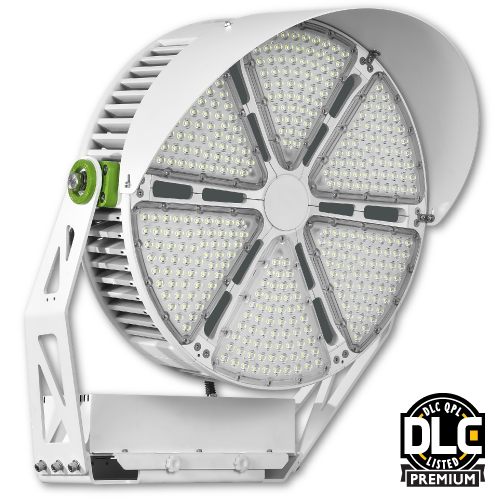
| Sports-Lighting Family | Published Wattage Options |
|---|---|
| PRO Sports | 750W and 1200W |
| PNR Sports | 500W and 750W |
| ECO Sports | 310W and 500W |
These are available product options, not rules assigning one family to every stadium, school, recreation field, or municipal complex. Select products based on the project layout, electrical supply, mounting requirements, controls strategy, and selected configuration.
Identify the manufacturer, product family, complete model number, input power, voltage configuration, optical distribution, color specification, mounting method, and control interface for each proposed luminaire. Provide matching specification sheets, photometric files, and installation documents. Clearly identify substitutions and deviations from the requested equipment or performance requirements.
Specify the product-safety requirements that apply to the project and request evidence for the exact proposed equipment. Avoid treating one familiar certification mark as the only possible evidence unless the project requirements specifically establish that restriction.
If rebates are important, identify the utility program and request the listing information needed to verify eligibility. Keep potential incentives separate from the project price until eligibility is confirmed.
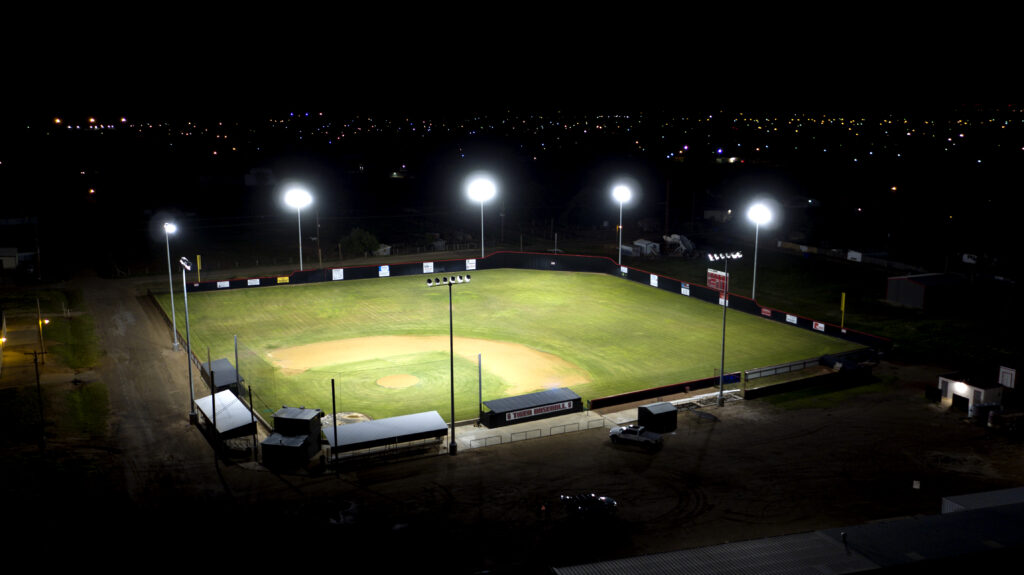
Existing infrastructure should be treated as something to evaluate, not something automatically reusable.
The RFP should identify who will review poles, foundations, anchors, brackets, mounting hardware, electrical capacity, grounding and bonding, and any equipment proposed for reuse. Request the fixture weight, effective projected area, bracket information, and other data needed by the qualified professionals evaluating the structures and electrical system.
AEON’s electrical contractor support page distinguishes product and layout assistance from final structural decisions. Existing poles, foundations, mounting systems, and electrical infrastructure should be confirmed by the appropriate qualified project professionals.
For a complete installed project, assign responsibility for removal, disposal, trenching, wiring, grounding and bonding, permits, access equipment, site protection, restoration, and inspections. For an equipment-only purchase, identify those activities as work by others.
The proposal shall identify which existing components are proposed for reuse and who will evaluate their suitability. Reuse of poles, foundations, mounting hardware, or electrical equipment shall be subject to the required professional review and project approvals. Include the scope and pricing for identified modifications, and state how unresolved existing-condition issues will be handled.
A photometric drawing answers lighting-distribution questions. It is not a substitute for structural approval, electrical construction documents, permitting, or installation planning.
Give respondents the applicable local lighting restrictions and identify nearby homes, roads, parking areas, property boundaries, and other sensitive locations.
Ask the design team to specify where off-site illuminance and glare will be evaluated, which operating conditions apply, and what limits will be used. The calculations should represent the proposed mounting positions, optics, aiming, shielding, and control settings.
Evaluate the proposed system at the locations and operating conditions identified in the owner’s performance schedule. Submit the required off-site illuminance and glare calculations using the proposed mounting and aiming. Identify any shielding, control settings, or other measures needed to meet the stated criteria.
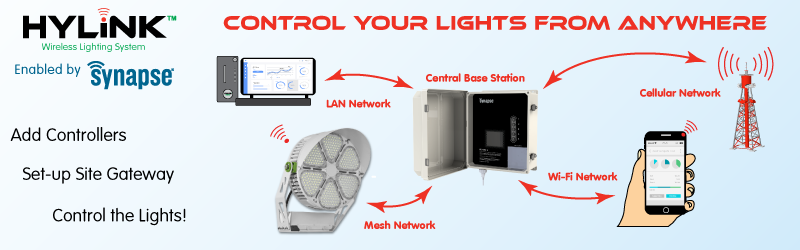
“Wireless controls” is not a complete operating requirement. Describe the fields or zones that need independent control, who may change schedules, which dimming scenes are required, whether remote access is needed, what local override is available, and how the system should operate if internet or cellular service is unavailable.
AEON’s HyLink lighting-control options can support project-specific grouping, switching, dimming, scheduling, and configuration-dependent remote access. Confirm the selected architecture, required hardware, available functions, communications method, commissioning scope, and recurring charges for the quoted system.
Describe the proposed control architecture, compatible luminaires, control zones, scheduled scenes, user permissions, local operation, and remote-access method. Identify internet or communications requirements, required hardware, commissioning responsibilities, and staff training. Separately disclose recurring subscription, communications, licensing, and support charges.
Treat RGBW or RGBA entertainment lighting as a separately defined requirement or priced option. AEON offers additional color-lighting capabilities, but entertainment lighting should not replace verification of the white-light performance required for sports.
A rated LED life is not the same as a written warranty covering the complete installed system. Product reliability also involves drivers, electronics, controls, connectors, thermal conditions, installation quality, and other system components.
Request separate explanations of manufacturer product coverage and contractor workmanship coverage. Ask specifically about luminaires, drivers, LED modules, controls, shipping, labor, lift access, removal, reinstallation, re-aiming, and exclusions. Extended warranty options should be confirmed for the actual project rather than assumed to accompany every proposal.
Provide the written warranties offered for luminaires, drivers, controls, mounting equipment, and installation workmanship, as applicable. State each warranty’s duration, start date, exclusions, claims procedure, and responsible party. Identify whether labor, shipping, access equipment, removal, reinstallation, and re-aiming are included, excluded, or separately priced.
Use one pricing form so every respondent addresses the same scope. For an installed project, separate equipment, controls, mounting components, engineering, installation, electrical work, access equipment, disposal, restoration, testing, training, freight, taxes, allowances, and optional features.
For operating-cost comparisons, provide common assumptions such as annual operating hours, defined lighting scenes, electricity rates, and the evaluation period. Keep energy, maintenance, and incentive assumptions visible rather than combining them into one savings percentage. AEON’s sports lighting cost calculator can help begin that discussion, but the RFP should use the facility’s actual assumptions.
Complete the owner’s pricing schedule for all required work. Identify the base price, separately priced options, allowances, exclusions, recurring charges, and quotation-validity period. State all assumptions used in energy and maintenance estimates. Show potential rebates separately from the project price and identify the program and eligibility assumptions used.
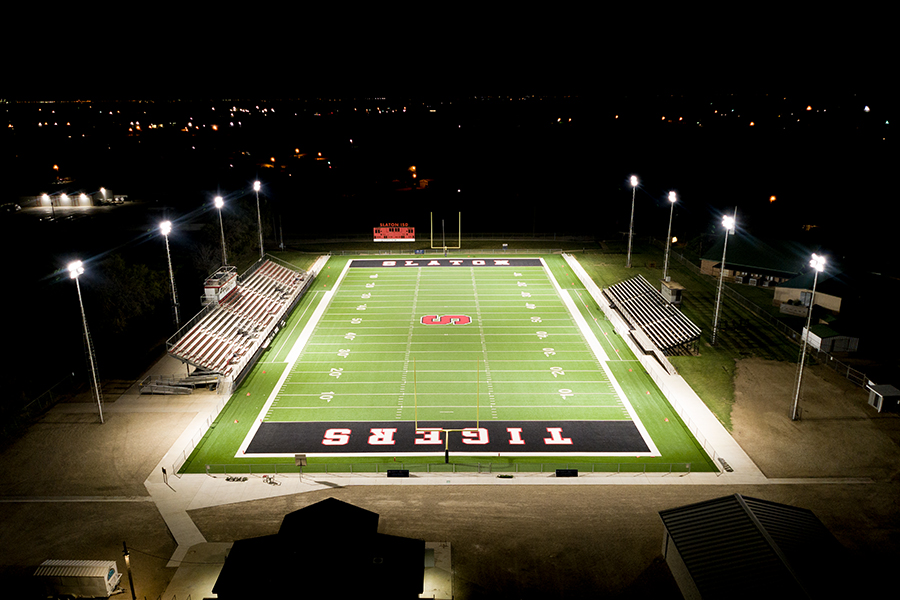
An RFP needs both a procurement schedule and a project schedule.
Identify the issue date, site-visit arrangements, question deadline, addendum process, submission deadline and time zone, required submission method, and anticipated decision date. Then establish milestones for submittal review, equipment release, delivery, site preparation, installation access, aiming, commissioning, and field availability.
A useful scheduling question is: When can the existing lights be removed without jeopardizing the next practice, game, tournament, or community event? The answer affects shutdown planning, installation sequencing, and schedule contingency.
Provide a proposed schedule identifying submittal preparation, approvals, equipment lead times, delivery, installation, aiming, testing, training, and closeout. Identify dependencies on owner decisions and site access. State any conflict with the required completion date of [date] and the facility blackout periods listed in [schedule reference].
Publish the proposal-evaluation method before submissions arrive. Identify mandatory requirements, evaluation factors, how price will be considered, how alternatives will be reviewed, and the documentation process required by the owner’s procurement rules.
Decide how the owner will verify that the installation matches the approved proposal and project documents.
Identify who will check installed models and quantities, mounting positions, aiming, controls operation, and lighting performance. If field measurements are required, state the procedure, measurement locations, operating settings, equipment requirements, reporting format, and responsibility for correcting deficiencies.
AEON’s guide to aiming and commissioning sports floodlights explains why fixture orientation, control settings, and field verification belong in the closeout plan.
Before owner acceptance, provide the inspections, test reports, operating demonstrations, and closeout documents specified for the contracted scope. Where field measurements are required, document the measurement locations, equipment, operating settings, and results. Identify and resolve deficiencies through the contract’s approved process. Provide final equipment schedules, aiming information, controls instructions, warranty documents, and service contacts.
Distinguish initial measurements from maintained performance. A completion-night test evaluates the installed system under the recorded conditions. Long-term maintained-lighting projections depend on the documented light-loss and maintenance assumptions used in the design.
Before issuing the package, confirm that each of the following subjects has been addressed.
| Check | Confirm Before Release |
|---|---|
| Procurement process | The purchasing method, supplier participation, required notices, and evaluation rules have been reviewed. |
| Defined scope | Equipment, technical support, installation, engineering, and work by others are clearly separated. |
| Common site information | Every respondent receives the same drawings, known existing conditions, access information, and process for resolving gaps. |
| Performance schedule | Sports, levels of play, standards, illumination, uniformity, off-site criteria, color, recording needs, and operating scenes are defined. |
| Product evidence | Exact models, configurations, photometric files, electrical data, mounting information, controls, and required certifications are requested. |
| Infrastructure responsibilities | Pole, foundation, mounting, electrical, grounding, permitting, and site-work responsibilities are assigned. |
| Controls and recurring costs | Required functions, control zones, remote-access arrangements, communications, training, and recurring fees are disclosed. |
| Warranty and service | Written coverage, exclusions, access-equipment costs, labor responsibilities, and claims procedures can be compared. |
| Schedule and instructions | Questions, addenda, submission rules, approvals, lead times, installation windows, and completion milestones are stated. |
| Acceptance and closeout | Testing, deficiency resolution, training, final documents, warranties, and service contacts are defined. |
Before release, replace every bracketed placeholder, remove unused alternatives, and resolve conflicts among the drawings, performance schedule, scope, pricing form, and submission instructions.
AEON can support project teams with product specifications, IES files, photometric layouts, controls guidance, and project-specific technical information. Confirm the requested scope in writing. Pole packages, remote-driver configurations, extended warranties, controls, and other optional support should not be assumed to accompany every equipment quote.
Within the owner’s procurement procedures, provide the facility location, available drawings, intended sports and competition levels, required performance criteria, existing equipment information, desired controls, schedule constraints, and proposal deadline.
Review completed AEON sports lighting projects for real-world context, but keep the RFP requirements tied to the owner’s own site, scope, and acceptance criteria.
Use AEON’s current product documents and a facility-specific lighting layout to begin the equipment discussion. The owner, procurement staff, design professionals, contractor, and supplier can then identify what belongs in the final RFP and who is responsible for each part of the project.
A useful RFP should define the procurement method, project scope, common site information, required lighting performance, exact product submittals, infrastructure responsibilities, controls, warranties, pricing format, schedule, evaluation method, acceptance testing, and closeout documents.
The RFP should first define the required field performance. Wattage is only one equipment characteristic and cannot show how a luminaire will distribute light across the field. Require project-specific photometric results and complete configuration information.
The owner may describe reuse as a project goal, but the solicitation should identify who will evaluate the existing poles, foundations, anchors, mounting hardware, and proposed loads. A lighting layout does not establish structural suitability.
Request the complete model and ordering configuration, specification sheets, electrical data, mounting details, photometric or IES files, installation instructions, controls information, and evidence for the certifications required by the project.
Compare proposals against the same required scope, performance schedule, pricing form, and submission rules. A lower total may reflect fewer included services rather than better value, so exclusions, optional items, recurring charges, testing, warranties, and work by others should remain visible.
AEON can provide current product specifications, project-specific photometric layouts, IES files, controls guidance, and technical information for proposed AEON equipment. The owner’s procurement rules, professional design responsibilities, permitting, structural and electrical approvals, installation scope, and final contract requirements should remain clearly assigned to the appropriate parties.
Get help choosing the right AEON LED solution for your field, facility, venue, or outdoor space.