
Ready to Upgrade Your Lighting?
Get help choosing the right AEON LED solution for your field, facility, venue, or outdoor space.

The season opener is on the calendar. Your facility needs better lighting. Now comes the practical question:
How early should you start?
Begin by separating the installation schedule from the complete project schedule. Mounting and connecting the fixtures is only part of the work. Design, approvals, equipment coordination, testing, and handover belong in the plan, too. Commissioning, the process of verifying that the system performs as intended, should be planned early, not added after construction is finished.
No single completion window fits every sports lighting project. The useful answer comes from confirming your scope, identifying what must happen before each stage can begin, and working backward from the date the facility needs to be operational.
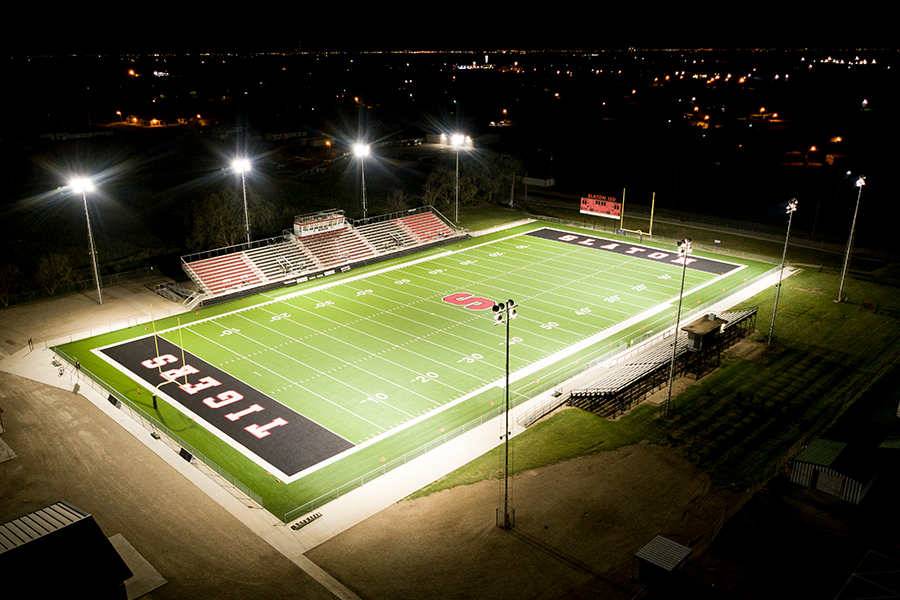
Set your target in-service date: the day the lighting must be installed, checked, and ready for staff to operate. That may be an evening practice before the first scheduled game.
Then distinguish a fixture upgrade from a larger infrastructure project. Reusing suitable poles and electrical infrastructure creates a different scope from installing new foundations, poles, and electrical service. Existing poles still need evaluation for the proposed equipment; fixture weight alone doesn’t establish suitability because wind loading and the full mounting configuration also matter.
Ask the project team to identify the work required before discussing a completion commitment. “Replace the lights” is a starting point, not a complete scope.
Build room between final verification and the first event for any adjustments the project team identifies.
Gather the facility dimensions, intended sports, level of play, mounting locations, and available electrical information. For an existing installation, include fixture counts, mounting heights, equipment records, and photographs.
AEON offers sports lighting layouts and product-selection support to help evaluate proposed fixtures, optical distributions, and calculated illumination before ordering. A layout is a prediction based on the supplied information, not a substitute for installation checks or separate structural and electrical review.
Use this stage to settle operating needs as well. Explain whether individual courts need separate control, whether games will be streamed, and whether nearby properties require particular attention.

Give purchasing and project approvals actual milestones rather than leaving them as an undefined step between the quote and installation.
Ask your organization when funding can be authorized, who approves the equipment, and what purchasing process applies. Have the responsible project professionals identify applicable permit reviews, inspections, and utility coordination.
Confirm what the proposal includes. Clearly assign responsibilities for product supply, structural engineering, electrical installation, controls setup, and final verification. Do not assume that a manufacturer’s equipment quotation includes every project service.
AEON provides product documentation, photometric layouts, controls guidance, and project-specific technical support. Confirm AEON’s agreed scope alongside the responsibilities of your engineer, installer, and facility team. For more about assembling the approval team, see AEON’s discussion of decision-makers in sports lighting projects.
Ask for availability on the selected configuration, not just the product family.
Confirm the models, quantities, voltage, optics, mounting accessories, and controls. AEON’s product documentation resources emphasize checking the model, configuration, and document revision before using information for final project planning.
Then ask when the quoted lead time starts. Is it measured from the purchase order, approved documents, payment, or another release requirement? Clarify whether the stated date means shipment or arrival at the facility.
Include every component needed for the installation, not only the luminaires. Confirm the status of brackets, poles, control equipment, and other separately supplied items.

Ask the installer to develop a schedule around the approved scope, available access, and the facility’s operating calendar.
Discuss lift access, surface protection, excavation, foundation readiness, electrical work, weather allowances, and required inspections.
Address access equipment, ceiling work, court protection, work zones, and closure periods.
Do not treat separate tasks as interchangeable. AEON’s published design workflow distinguishes equipment selection, electrical coordination, structural review, installation, controls commissioning, and verification of aiming and field performance.
Plan any shutdown of the existing lighting with the installer rather than scheduling it solely around an estimated shipment date.
The project is not ready for opening day simply because the lights turn on.
Agree in advance on the checks required before acceptance. Include verification of fixture aiming, the specified lighting-performance checks, controls operation, and any corrective work identified during testing.
Schedule staff training as part of handover. Facility operators should know how to use the installed controls and where to find operating instructions, maintenance information, and support contacts.
For outdoor performance checks, arrange appropriate after-dark access with the project team. Do not leave the first full operating test until spectators are arriving.
Fill in the final row first, then work upward with the responsible parties to establish dates.
| Task | Responsible Party to Confirm | Required Input | Target Completion |
|---|---|---|---|
| Complete site review and lighting layout | Owner, lighting team, and appropriate professionals | Site information, intended use, existing conditions | __________ |
| Approve scope and release purchasing | Owner’s authorized purchasing team | Approved proposal, funding, purchasing requirements | __________ |
| Receive installation equipment | Supplier and receiving coordinator | Released order and confirmed delivery arrangements | __________ |
| Complete site preparation | Installer and relevant professionals | Approved plans, access, applicable authorizations | __________ |
| Complete installation and aiming | Qualified installer | Ready site, required equipment, installation documents | __________ |
| Finish testing, corrections, and training | Assigned verification team and facility staff | Installed system, acceptance criteria, operating documents | __________ |
| Place lighting into service | Facility owner or authorized representative | Completed checks and agreed acceptance | __________ |
This is a planning template, not a committed AEON schedule. Confirm responsibilities, required inputs, and dates for the actual project.
You do not need a complete engineering package to begin discussing your project. Start with the facility type, location, target in-service date, and whether you are planning a new installation or an upgrade.
AEON can help you review product options, request lighting layouts, and identify supporting product information. Use that discussion to establish what needs confirmation before the supplier, installer, and project team commit to dates.
Start as early as practical and work backward from the date the system must be fully operational. The appropriate lead time depends on design, approvals, equipment selection, site work, delivery, installation, testing, and commissioning, not only the number of days required to hang fixtures.
Often the scope is simpler when suitable poles, mounting locations, and electrical infrastructure can be retained. However, those components still need project-specific evaluation, and a fixture-only retrofit can still require design review, access planning, controls work, aiming, and final verification.
Coordinate the equipment with the approved design. Confirm the model, optics, voltage, mounting accessories, controls, and layout assumptions before finalizing the order.
Common schedule risks include incomplete site information, delayed approvals, unresolved structural or electrical questions, equipment changes, unavailable accessories, unfinished foundations, site-access conflicts, weather, inspections, and facility-calendar restrictions.
The installed system should be checked for aiming, specified lighting performance, controls operation, and any required corrective work. Staff should also receive the operating information needed to use the system before the first event.
A final schedule depends on the actual project scope and the responsibilities of the owner, supplier, installer, engineers, utilities, and other project participants. Use AEON’s product and layout support to clarify the equipment side, then confirm the complete project schedule with all responsible parties.
Get help choosing the right AEON LED solution for your field, facility, venue, or outdoor space.