
Ready to Upgrade Your Lighting?
Get help choosing the right AEON LED solution for your field, facility, venue, or outdoor space.


Successful façade lighting begins with the building rather than the fixture. Surface material, color, reflectance, texture, mounting location, throw distance, viewing direction, and the desired effect all influence the required optic, output, aiming, and control system.
Before selecting a luminaire or optical distribution, establish the building’s primary architectural goals. Architectural lighting can transform a structure at night, but the technique must align with the building’s form and function.
Delivers smooth, even illumination across wide vertical surfaces. Ideal for flat elevation surfaces, smooth stone, or concrete walls requiring uniform color rendering.
Places luminaires close to the façade to cast narrow light upward, emphasizing textures such as masonry, brick, carved stone, or textured architectural panels.
Focuses narrow beams on specific architectural details, columns, arches, entryways, sculptures, or decorative elements without flooding the entire surface.
Projects light over extended distances from ground-level, setback poles, or adjacent structures to illuminate tall towers, steeples, or high building crowns.
Outlines structural framing, trusses, bridge supports, or rooflines, revealing the building’s three-dimensional skeleton after dark.
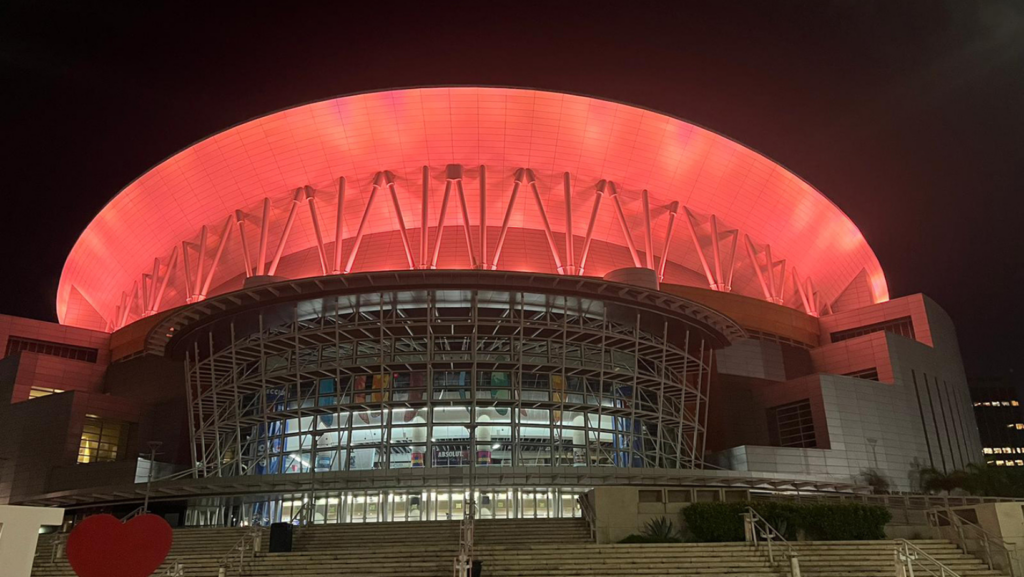
Provides dynamic team or holiday color scenes during special events, then smoothly switches to a clean, elegant white-light appearance for standard night operation.
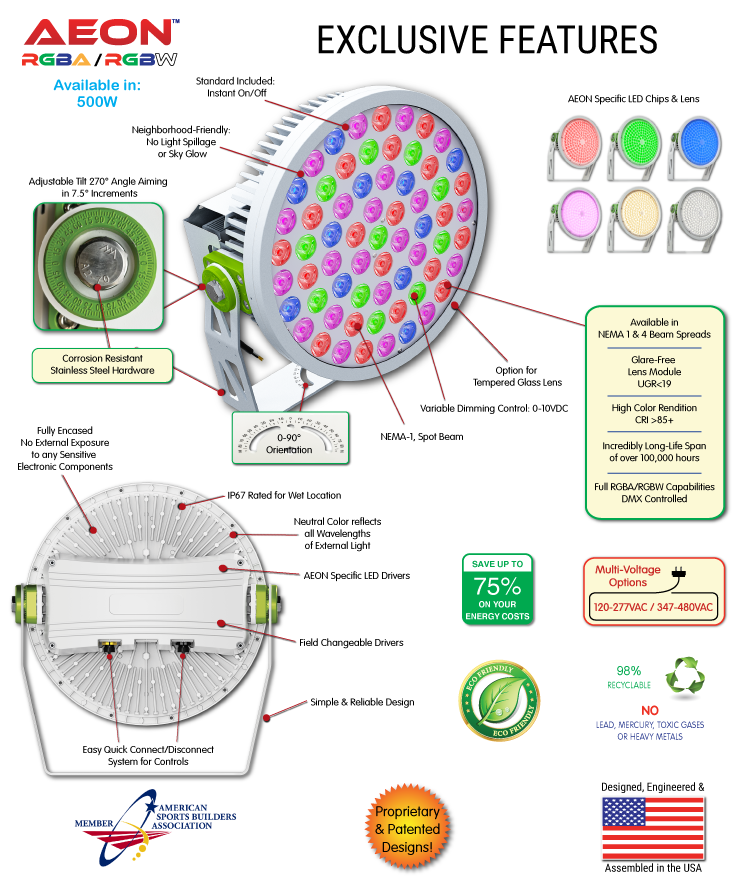
The AEON NEMA 1 luminaire is engineered for environments where standard lighting falls short, delivering unparalleled precision through a disciplined, ultra-narrow beam. By utilizing a specialized NEMA 1 distribution, this luminaire concentrates every lumen into a piercing column of light that can maintain 2.0 foot-candles at distances up to 435 feet under ideal conditions.
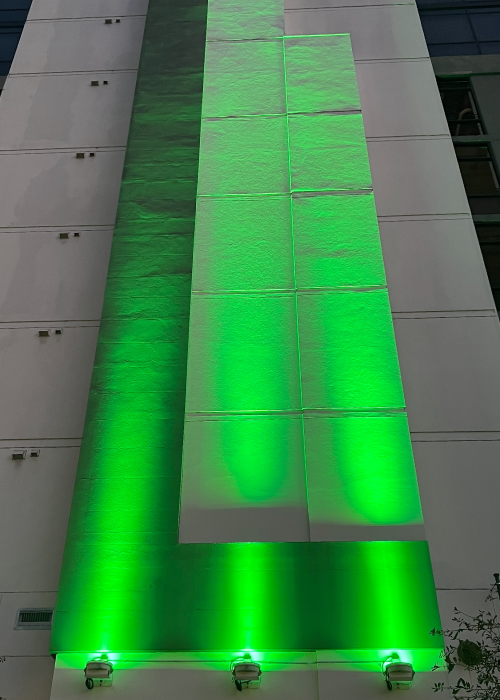
A luminaire does not illuminate the air; it illuminates a surface. How that surface responds to light depends heavily on material composition, color absorption, and surface finish:
Selecting the appropriate beam spread ensures light energy reaches the target area without overshooting into the night sky or spilling onto neighboring properties.
The Value of Mockups and Calculations: Computerized photometric models evaluate light levels, but on-site mockups are strongly recommended for complex architectural lighting. Physical mockups confirm color interactions with the exact building materials, verify cutoff angles, and demonstrate optical performance before full installation.
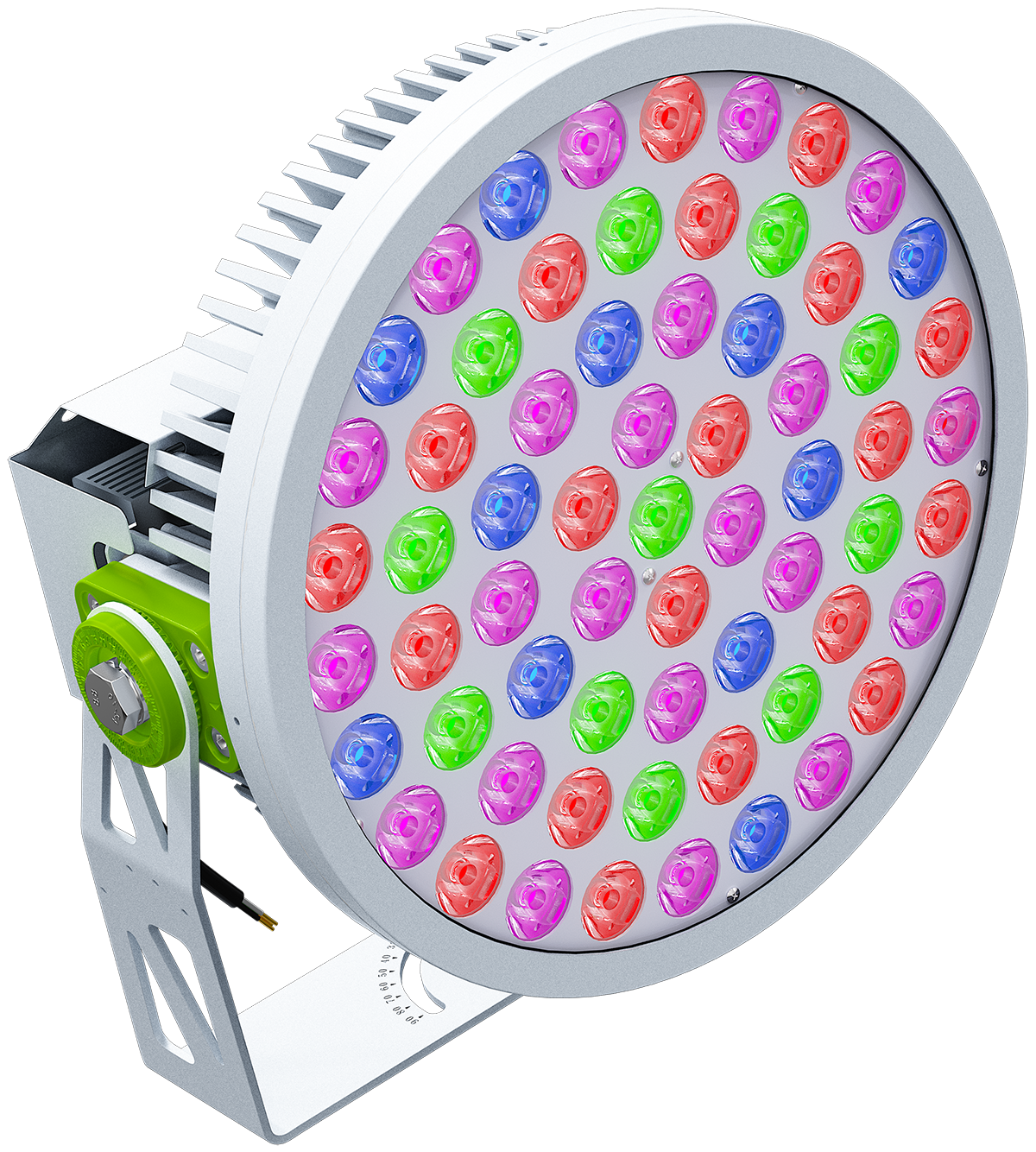
Choosing between RGBA (Red, Green, Blue, Amber) and RGBW (Red, Green, Blue, White) determines the color spectrum flexibility and white-light quality of your installation.
While RGB mixing can create basic colors, relying on RGB alone produces a muddy, unnatural white. Adding a dedicated 4th channel drastically expands performance. For an in-depth technological breakdown, read our RGBA vs. RGBW color technology comparison.
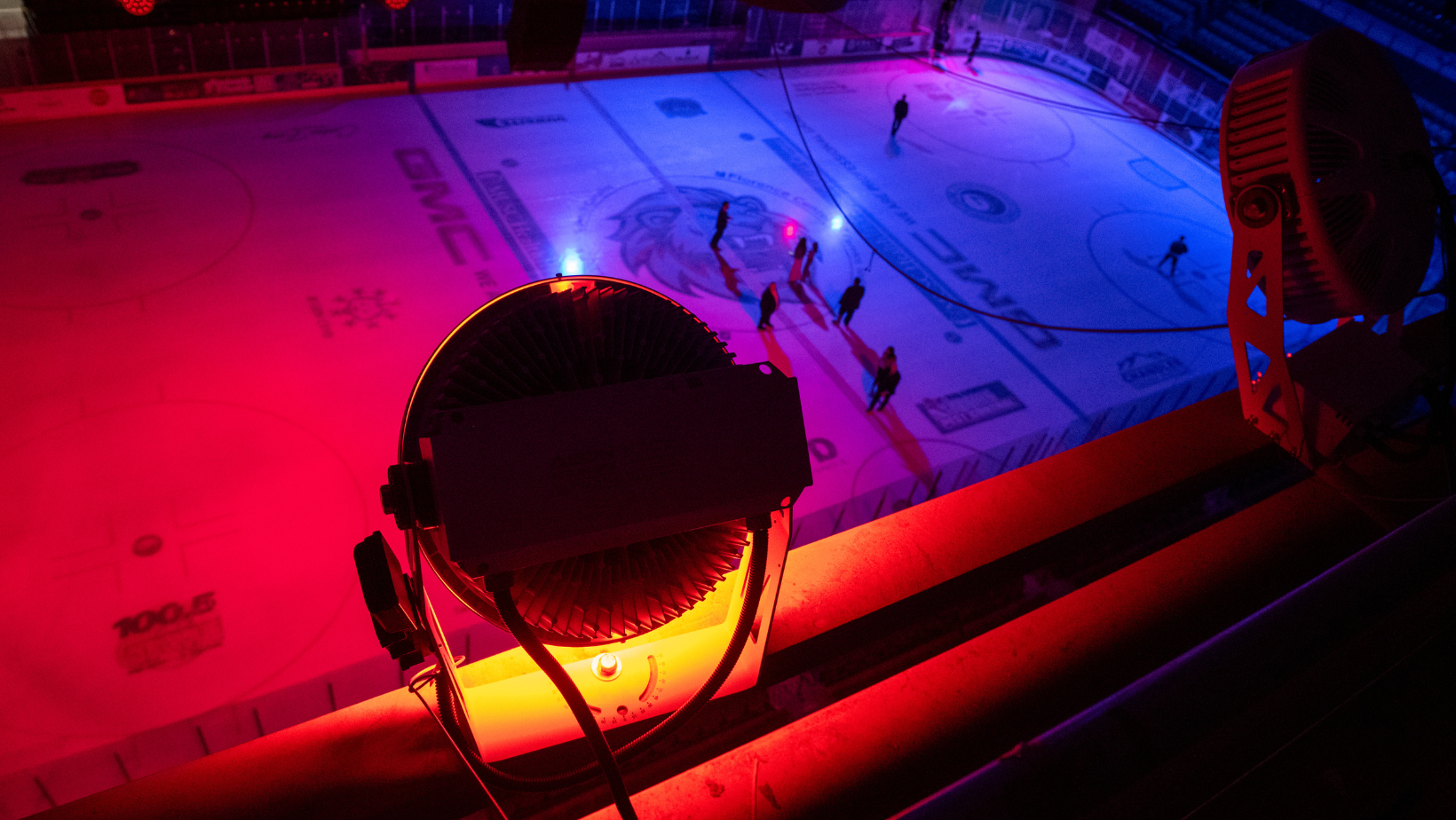
Intelligent control is required to effectively manage color-changing architectural fixtures. The control platform must allow seamless transition between automated schedules and custom event scenes.
Note: Control protocols and system compatibility should be verified for the exact AEON fixture configuration selected.
Architectural luminaires mounted on exterior elevations are subject to severe environmental exposure. Durability directly impacts long-term system reliability:
To help your project team develop an accurate architectural lighting plan, submit the following details to AEON:
Send AEON building elevations, photos, mounting information, and your desired effects to discuss an RGBW façade-lighting concept tailored for your venue.
Get help choosing the right AEON LED solution for your field, facility, venue, or outdoor space.