


 English
 Spanish
 French
 Arabic
 Ukrainian
 Portuguese
 German
 Italian
 Russian
 Dutch
Dutch
Unmatched Efficiency,
Unrivaled Illumination.
Learn More About Our Eco-Friendly LED Lighting Products.
Choose an Option Below!


Not long ago, a sports lighting project could be approved by a single person, such as the athletic director or facilities manager, resulting in bids, discussions, and a final signature. But by 2026, these projects will involve a broader group of decision-makers.
Athletic directors still play a major role but now share the table with facilities, finance, risk, IT, neighbors, and community stakeholders, each with different priorities and views of “success.”
Understanding each group’s needs is crucial; otherwise, your project may slow, stall, or be poorly redesigned. Effective communication makes lighting projects easier to justify, faster to approve, and more likely to meet the facility’s needs.
Below is a list of common decision-makers involved in upgrading stadium lighting:
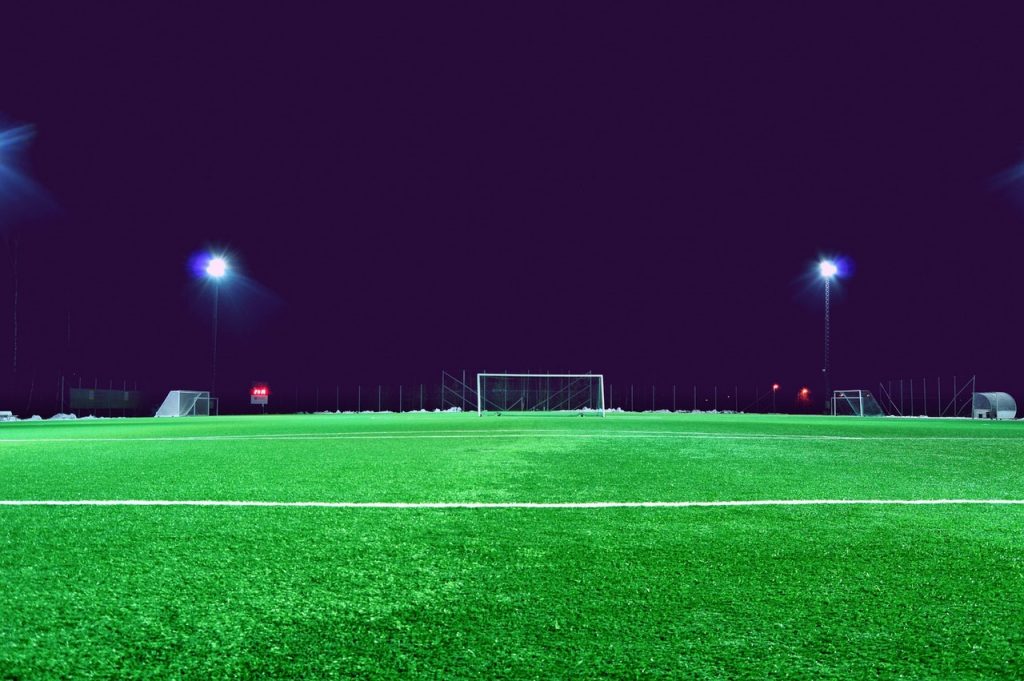
For athletic directors, lighting is really about getting the right lumens, not just wattage. They focus on creating the best possible athletic experience. They want exciting games under bright lights, with clear visibility so athletes can follow the ball with confidence.
They also value officials who aren’t distracted by glare or difficult calls, and they want spectators to enjoy a clear view from every seat. It’s all about making the game enjoyable and accessible for everyone involved.
More, they want the field to look good on camera. With livestreams, recruiting clips, and highlight videos, a program’s reputation is increasingly built online. Poor lighting makes footage look dull or washed out, noticed by coaches, parents, and athletes. For the AD, lighting shows professionalism and competitiveness. As school sports get busier, a well-lit venue becomes even more important.
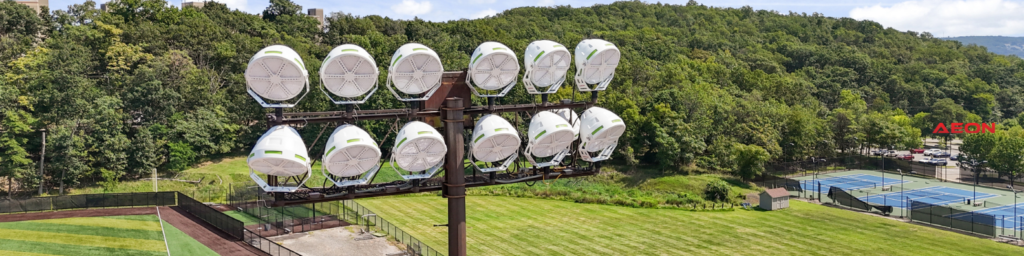
If the AD thinks about the Friday night experience, the facilities manager feels about the other six days of the week, the times when no one else is watching, but everything still has to work flawlessly.
This group worries about fixture reliability, electrical loads, and maintenance frequency. They think about whether they’ll need specialized lifts, how often drivers fail, and whether the system creates more headaches than it solves. Many have been burned by “smart” systems that promised the world but delivered confusing interfaces and constant support calls.
What they want is a system that works, is easy to operate, and doesn’t require unnecessary pole climbing. They want standardization, simplicity, and predictable upkeep. When facilities managers are confident in a system, the entire project accelerates.
Finance teams care less about which fixture you choose and more about the financial clarity behind the project.
They need to know what the lighting system will cost, not just upfront, but over the next 10 or 20 years. They want to understand energy savings, maintenance reductions, and any potential rebates. They want guardrails on spending and a realistic expectation of when the investment will pay for itself.
Most importantly, finance needs numbers they can defend to leadership, boards, councils, or taxpayers. They don’t want speculative promises. They want transparent cost modeling, scenario comparisons, and predictable long-term planning.
A clear cost estimate or calculator removes friction. When finance knows exactly what the lighting will cost and when it will begin to deliver value, approvals come far more easily.
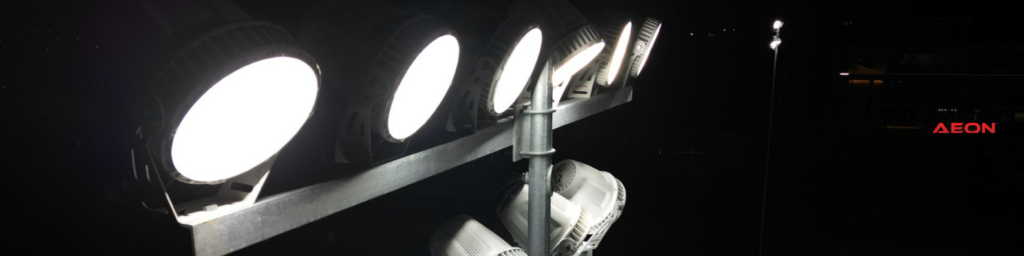
Risk managers often stay out of the spotlight, but they are powerful behind-the-scenes influencers.
Their job is to consider everything that could go wrong, from athlete safety to trip hazards to visibility around spectator entrances and parking lots. When night use increases, risks rise, and they know it. They want to see lighting that protects players and spectators, reduces dark areas, and aligns with recognized standards or recommended practices.
They also think about lawsuits. If an accident happens, can the facility demonstrate that lighting levels and uniformity meet reasonable expectations? Photometric reports, glare mitigation, and spill-light analysis aren’t “nice-to-have” documents for them; they’re protections.
When risk management feels confident, your project becomes easier to justify. When they don’t, everything slows down.
Controls have evolved from simple switches and timers to integrated systems connected through networks, wireless hubs, apps, and cloud platforms. As a result, IT departments now play a role in managing these advanced lighting systems.
Their concerns are practical: who has access to the control system, how authentication is managed, whether the platform integrates smoothly with existing infrastructure, whether coaches can operate scenes without accidentally overriding configurations, and the security of remote access.
If IT believes a lighting upgrade will introduce complexity or unnecessary risk, they’ll push back. If they think the system is well-engineered, secure, and intuitive, they’ll support it.
Neighbors don’t appear on internal org charts, but they’ve become some of the most influential decision-makers, especially in suburban neighborhoods or facilities near homes.
They care about spill light into their yards, glare through bedroom windows, noise from extended night use, and whether the facility respects community expectations.
When neighbors feel blindsided, they can quickly become the loudest opposition to a project. But when they see thoughtful designs, especially visuals showing reduced spill light compared to older systems, they often become supporters rather than obstacles.
Every stakeholder brings different priorities to the table. But they all want clear, project-specific information they can trust.
Our engineering-driven approach starts with a custom lighting layout that shows your actual field, your actual poles, and your actual night performance, not generic promises. It gives ADs a true sense of game quality, gives facilities teams clarity on pole reuse and maintenance, gives finance predictable cost scenarios, and gives neighbors confidence in spill- and glare-control.
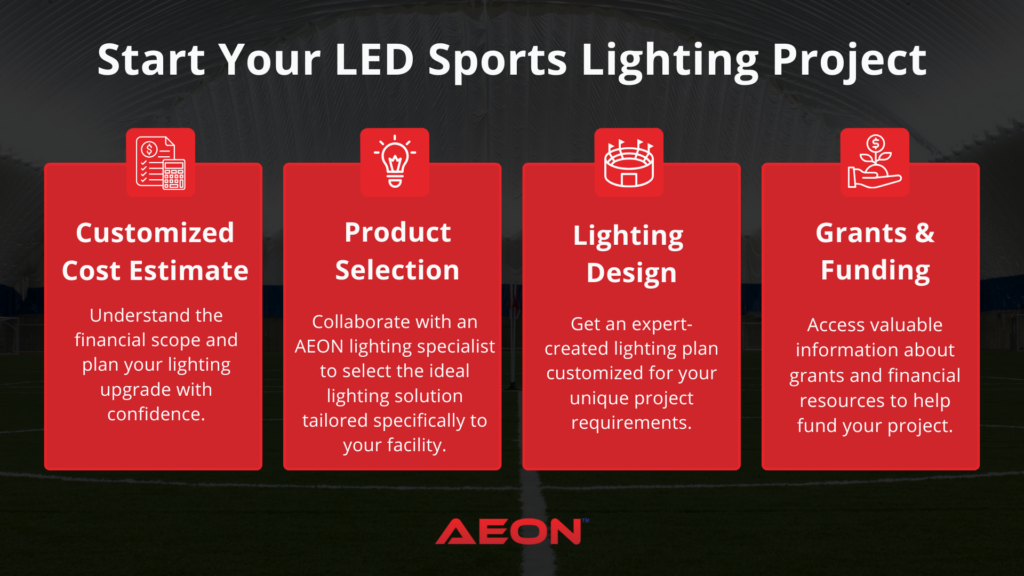
Pair that with a clear, realistic cost estimate, and every decision maker finally gets what they need to move forward. A free lighting layout shows exactly what your field could look like under AEON’s performance standards, and a custom cost estimate gives you the confidence to budget without surprises. With AEON guiding the process, you’re equipping every stakeholder with the answers, visuals, and reassurance they need to say yes!
Learn More About Our Eco-Friendly LED Lighting Products.
Choose an Option Below!