
Ready to Upgrade Your Lighting?
Get help choosing the right AEON LED solution for your field, facility, venue, or outdoor space.


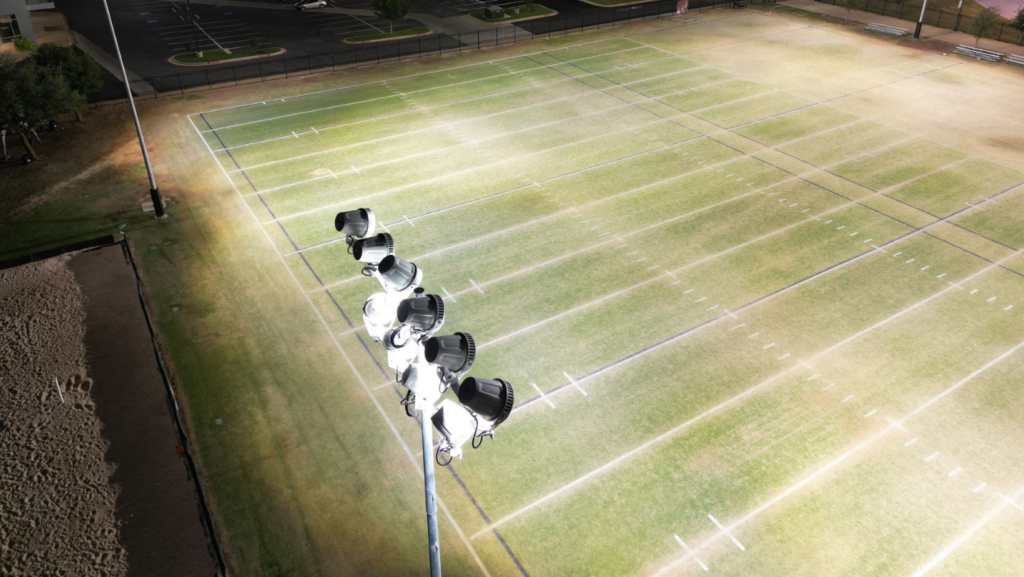
Lighting placement is extremely important to how a field actually performs, not just how bright it looks on paper. Athletes rely on balanced horizontal and vertical illuminance to clearly see movement, track the ball, and react quickly. At the same time, officials depend on strong depth and contrast to make confident, split-second decisions.
At the same time, cameras require consistent vertical light on faces, uniforms, and the ball from every angle to capture clean, broadcast-ready footage. That’s why a truly successful stadium lighting project focuses on how horizontal and vertical illuminance work together through precise fixture placement.
AEON LED Lighting designs sports lighting systems with this balance in mind, delivering better visibility and a better experience for everyone on and off the field. Learn more about how AEON makes it happen.
Horizontal illuminance, often denoted Eh, quantifies the amount of light reaching a flat, horizontal plane. In sports lighting, that plane is typically the field surface or the plane immediately above it.
This measurement tells you how bright the ground is. It affects how well athletes can see field markings, boundaries, and changes in surface conditions. For decades, horizontal illuminance was the primary metric for field design and evaluation because it was easy to measure and compare.
If horizontal illuminance is too low, fields feel dim and unsafe. If it’s uneven, players struggle with dark spots and visual fatigue. That’s why horizontal light levels and uniformity remain important, and why every lighting plan should include them.
However, horizontal illuminance primarily describes the game background. It does not fully explain what people are actually watching.
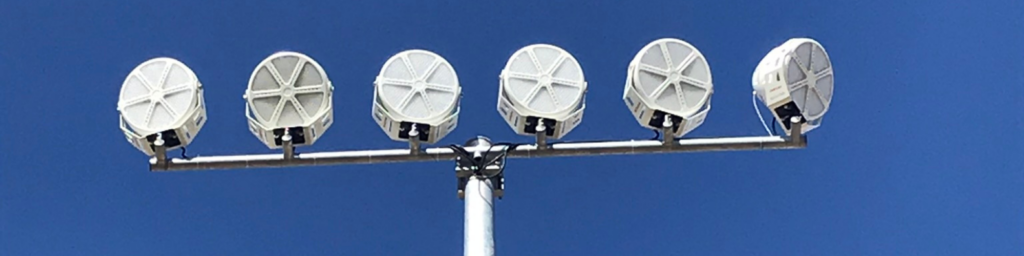
Vertical illuminance, denoted Ev, measures light incident on a vertical plane. Instead of looking down at the ground, it looks across the field at player height.
This is the light that illuminates:
In other words, vertical illuminance describes how well the action is lit.
A field can meet all horizontal requirements yet appear flat, shadowy, or poor on camera if vertical illuminance is too low. This is one of the most common complaints with older HID systems and early LED installations that focused only on hitting surface light levels.
If you’ve ever seen a game where the turf appears bright but players’ faces fade into shadow, you’ve experienced the issue.
When horizontal light is intense but vertical light is weak, the surface reflects light upward, yet players are not illuminated from sufficient angles. This causes harsh contrast and reduces visual clarity, particularly during fast-paced movement or aerial gameplay.
This affects more than appearance; athletes depend on facial cues and body positioning, while officials need to see hands, contact, and ball position. Cameras struggle in low light, resulting in noise or washed-out footage.
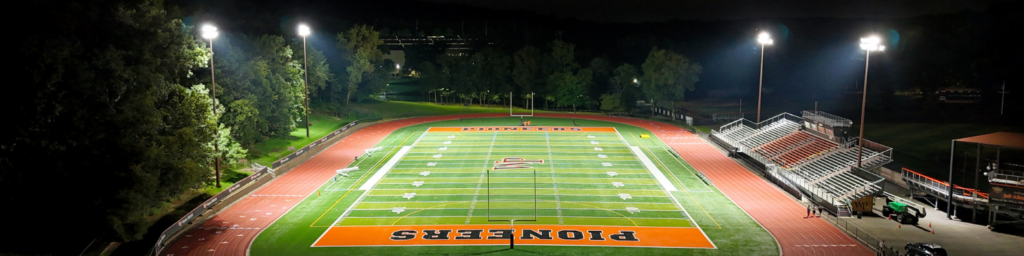
Professional lighting designers prioritize the balance between vertical and horizontal illuminance, expressed as the Ev/Eh ratio. While targets vary by sport and level, the key idea is that these light levels should be reasonably close, not drastically different.
When vertical light is positioned too low relative to horizontal light, players and objects appear flat. Conversely, when vertical light is too high, glare becomes more prominent, making scenes feel harsh and uncomfortable. Properly balanced lighting adds depth without causing distraction, helping the human eye and cameras adapt naturally and ensuring smooth gameplay.
Broadcast is the biggest reason vertical illuminance has become so important.
Television cameras view the field differently than the human eye. High-speed action, slow-motion replays, and high-res formats require consistent light on vertical surfaces. Cameras need light from multiple angles to ensure faces and jerseys are visible, regardless of the camera’s position.
Broadcast venues evaluate vertical light from multiple angles across the field rather than from a single angle. Lighting effective for spectators may still fail on camera if vertical coverage isn’t planned properly.
Even facilities not currently televised often design with broadcast in mind, benefiting streaming, highlight reels, and upgrades enabled by improved vertical performance.
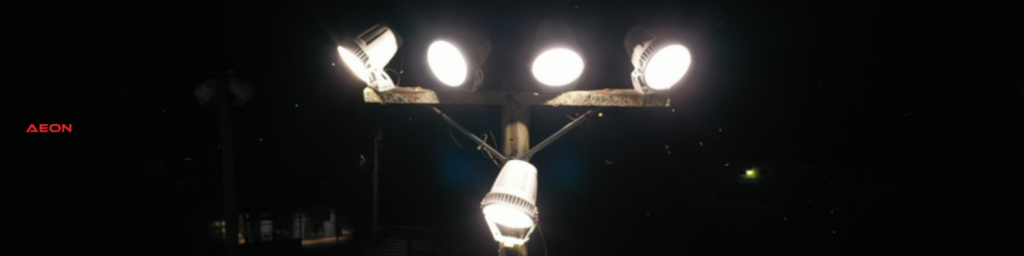
Horizontal illuminance is measured with the light sensor facing upward, parallel to the field surface, at a consistent height above the ground. Vertical illuminance is measured with the sensor facing sideways, perpendicular to the field, and often rotated to capture light from multiple directions.
Because vertical light depends on direction, it is common to measure it facing several angles at the same location. This more accurately reflects how players and cameras perceive the lighting during actual play.
Poor vertical illuminance usually isn’t caused by LED technology itself. Design shortcuts cause it.
One common mistake is using very wide flood beams aimed mostly downward. This boosts horizontal numbers but does little for vertical coverage. Another mistake is relying on fixtures from only one side of the field, which creates strong shadows on faces and bodies.
Even if average vertical light levels look acceptable, inconsistent coverage forces constant visual adaptation, which strains both athletes and cameras.
Good lighting design avoids these problems before fixtures are ever installed.
Better vertical performance doesn’t automatically require more wattage or more poles.
Instead, designers improve vertical illuminance by adjusting geometry. This includes using tighter, purpose-built beam distributions, cross-aiming light from multiple directions, and placing fixtures at angles that illuminate vertical surfaces without causing glare.
Modern LED sports lighting makes this easier than ever. Compared with older HID systems, LEDs offer more precise optics and better control, allowing designers to shape light rather than flood the field indiscriminately.
The result is better visibility with equal or lower energy use.
If you’re comparing bids or planning an upgrade, don’t stop at average foot-candles.
A strong lighting layout should clearly show horizontal light levels, vertical light levels, uniformity, and glare considerations. If broadcast or high-level play is a possibility, vertical illuminance should be demonstrated from relevant viewing directions.
Seeing this information up front helps you understand how the field will perform before equipment is ordered or installed. Great sports lighting is not just about how bright the field is. It’s about how well the game is visible.
If you’re planning a new system or upgrading an existing one, make sure your lighting design accounts for both. The difference isn’t just technical; it’s immediately visible the moment the lights turn on.
Request a free lighting design layout to help plan your project!
Get help choosing the right AEON LED solution for your field, facility, venue, or outdoor space.