
Ready to Upgrade Your Lighting?
Get help choosing the right AEON LED solution for your field, facility, venue, or outdoor space.


The term “retrofit” is often used loosely, which can lead to misunderstandings and misinterpretations during the bidding process. When it comes to stadium lighting, retrofit typically refers to upgrading existing HID fixtures by replacing them with energy-efficient LED fixtures.
LED sports luminaires, all while keeping as much of the existing infrastructure as possible. Moving from metal halide or other HID systems to LED doesn’t necessarily mean tearing everything out and starting from scratch.
Stadiums can often upgrade to LED lighting by retaining poles, wiring, and foundations, saving time and money and reducing disruptions. Typically, only luminaires, optics, and controls are upgraded, rather than full replacements that require new poles, foundations, and major electrical work.
The solution is to understand what needs to be replaced, what can stay, and how a modern sports lighting retrofit should be designed. When done correctly, an LED stadium lighting upgrade delivers better visibility and reduces maintenance costs without a full rebuild.
Companies like AEON LED Lighting design sports lighting systems for infrastructure-preserving upgrades, making retrofitting practical rather than a compromise.
Every successful retrofit starts with a clear picture of the existing system. Before anyone talks about LED wattages or fixture counts, the facility should document the basics: current fixture types, pole heights, aiming angles, voltages, and known problem areas on the field.
This step matters because HID systems were often overpowered to compensate for poor uniformity and long warm-up times. LEDs don’t work the same way. A smart retrofit uses optics and aims to improve performance.
This early evaluation also determines whether the project qualifies as a HID-to-LED field-light retrofit or requires limited structural upgrades.
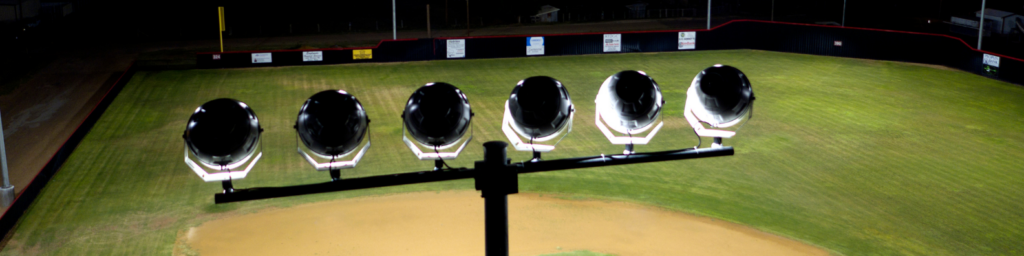
In many cases, yes, but only after verification. LED fixtures are almost always lighter and far more efficient than legacy HID systems, but weight alone isn’t the full story. Wind load, mounting configuration, and pole condition all matter. Existing poles must be structurally sound and capable of supporting the effective projected area of the new fixtures under local wind conditions.
Wiring is often reusable, provided it’s in good condition and properly sized. Many stadiums already have suitable voltage at the pole, allowing LED fixtures to be installed without pulling new conductors or trenching.
This is where a true retrofit shines. By confirming what can stay early in the process, facilities avoid unnecessary scope creep and keep the project focused on performance, not demolition.
One of the biggest mistakes in stadium retrofits is assuming LED upgrades are just one-for-one fixture swaps. That approach often leads to glare, dark spots, or wasted energy.
A proper sports lighting retrofit starts with a photometric design that looks at the field as a whole. The goal isn’t to match old wattage numbers; it’s to deliver the right light levels, uniformity, and visual comfort for athletes, spectators, and cameras.
Modern LED sports fixtures offer multiple beam distributions and precision optics, allowing designers to place light exactly where it’s needed. In many retrofit projects, this means fewer fixtures can deliver better results than the original HID system.
This design-first approach also allows facilities to retain existing poles. By working within current pole locations and heights, the lighting plan is optimized rather than forced.
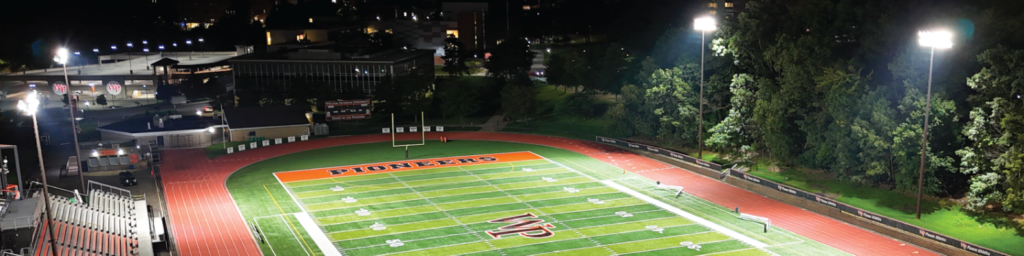
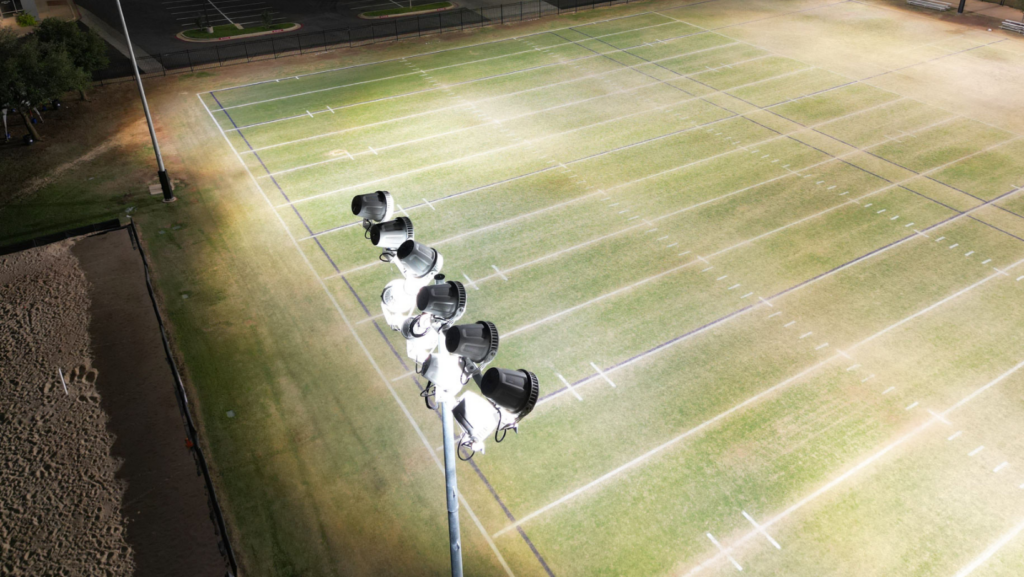
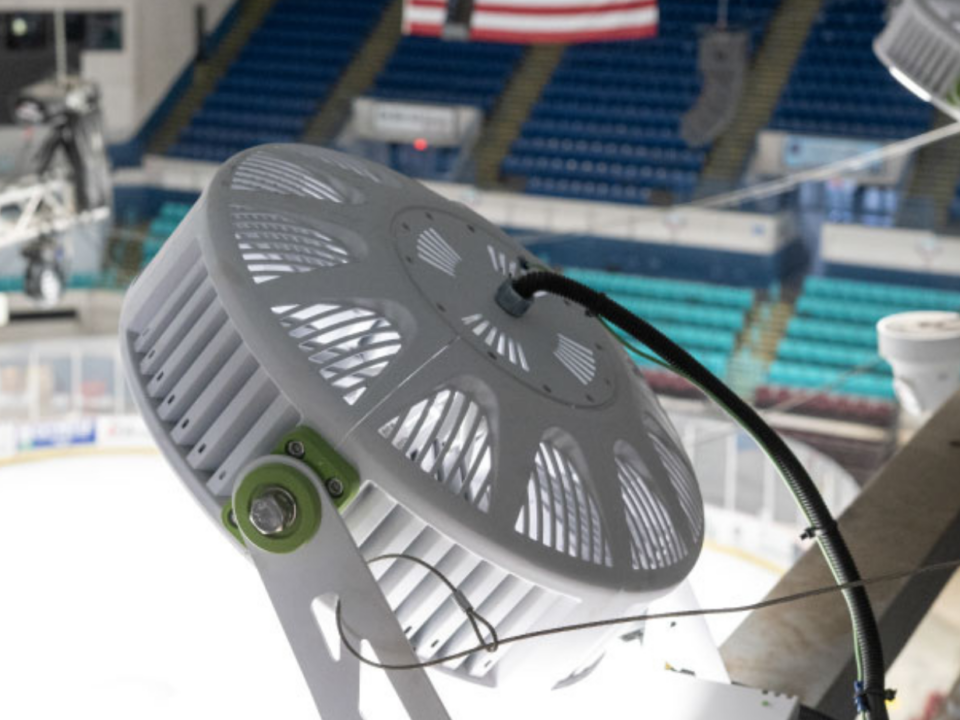
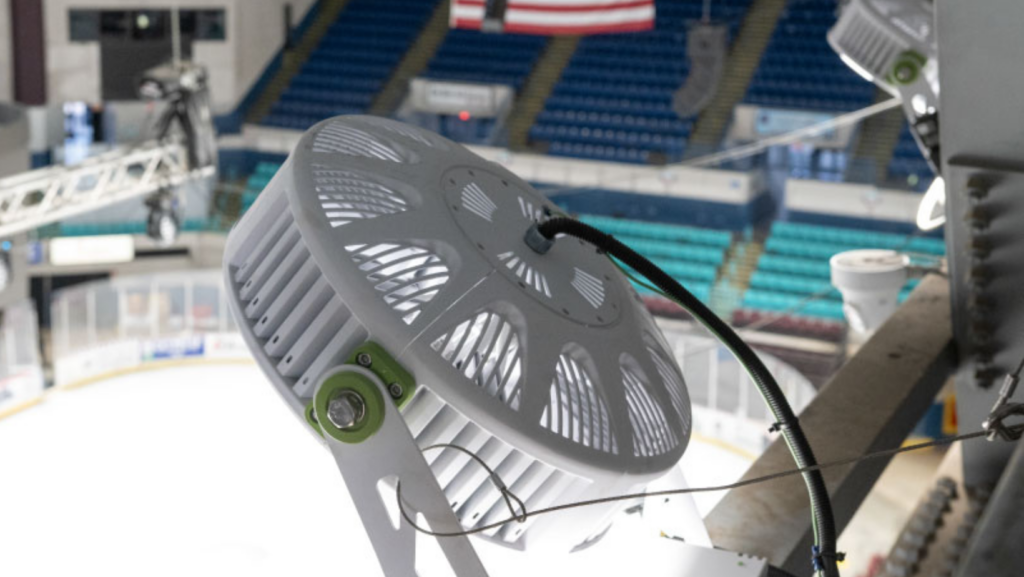
The most common approach is to replace HID fixtures with purpose-built LED sports luminaires mounted on existing poles or crossarms. This provides the best control over light distribution and glare, and long-term reliability, while keeping the infrastructure intact.
In some cases, conversion kits may be used within existing housings. While this can sound appealing, it’s not always ideal for sports applications and must meet strict safety and listing requirements. For competitive fields, purpose-built LED fixtures usually deliver better performance and fewer long-term headaches.
The important point is this: retrofitting does not mean cutting corners. It means upgrading intelligently.
One of the biggest advantages of an LED stadium retrofit is speed. Because the poles and foundations remain in place, installation time is shorter than for a full rebuild.
Work can often be staged pole by pole or in phases, allowing parts of the facility to remain operational. Pre-aimed fixtures, standardized mounts, and modern controls further reduce on-site labor.
For schools, municipalities, and clubs trying to work around game schedules, this reduced downtime is often just as valuable as the energy savings it yields.
Lighting controls are where LED retrofits deliver the greatest returns. Unlike HID systems, LEDs can dim instantly, support scheduling, and create multiple lighting scenes for games, practice, or maintenance.
Adding controls during a retrofit doesn’t mean replacing existing infrastructure. Wireless or low-voltage control systems can connect with current wiring, greatly enhancing usability. For many facilities, this marks the first time lighting genuinely adapts to actual field use instead of the other way around.
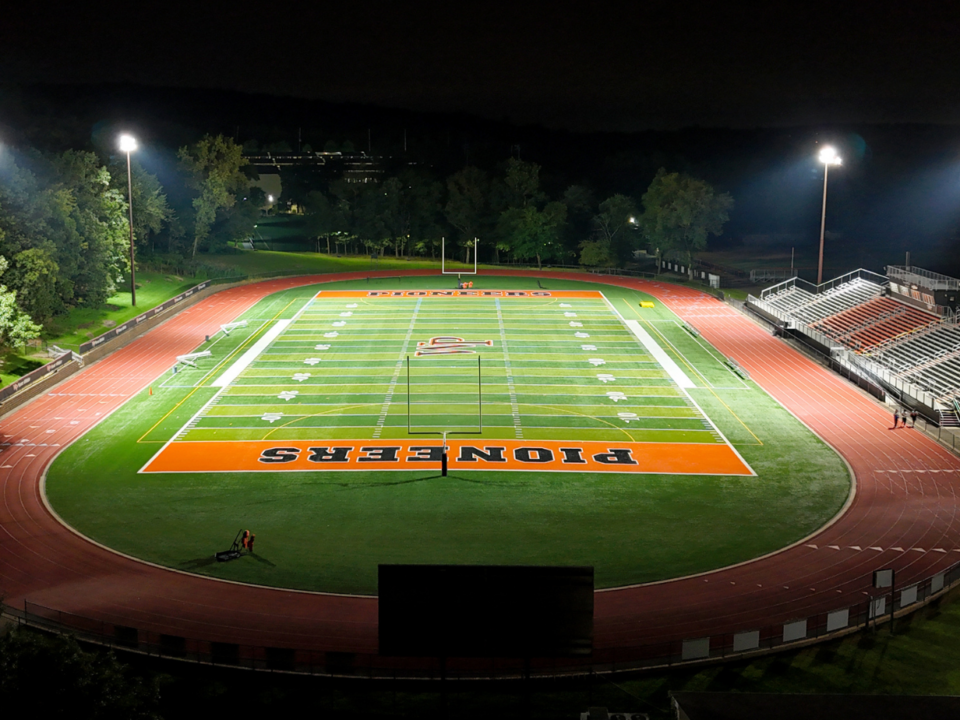
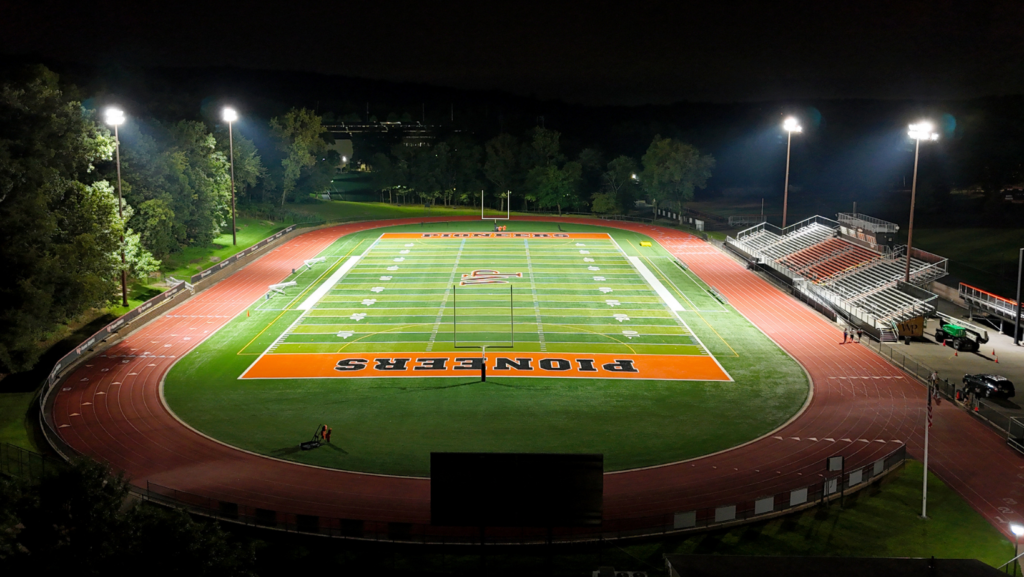
A modern LED stadium lighting upgrade avoids torn-up fields, downtime, and budget issues. If poles, wiring, and foundations are sound, a retrofit improves light, cuts energy costs, and ensures reliability without full replacement.
Having the right plan, including a professional system evaluation, a true photometric design, and LED fixtures engineered for retrofit applications, allows facilities to confidently replace outdated HID systems with high-performance LED lighting that looks better, performs better, and costs less to operate.
If you’re considering a stadium lighting upgrade, the next step is getting clarity. Talk with a lighting specialist or use our cost calculator to see what a retrofit could really look like for your field.
Get help choosing the right AEON LED solution for your field, facility, venue, or outdoor space.